How strong is Europe's low-carbon energy technology manufacturing industry?
author: pro
2025-01-14
According to the European Commission's study on the market and technological status of key net-zero technology manufacturing, the competitiveness of the EU's net-zero industry varies depending on key net-zero technologies and their supply chains, with significant supply security vulnerabilities and risks. Today's analysis is related to lithium-ion batteries. Batteries are key enabling technologies for the transition of power systems to renewable energy, mainly used in electric vehicle batteries and stationary energy storage batteries. Currently, the EU's demand for lithium-ion batteries is about 140 GWh per year, and it is expected to grow rapidly in the next few years, but the demand forecast for 2030 varies greatly: from about 362 GWh per year to about 1,000 GWh per year. At the same time, stationary applications are also a growing market. Electric vehicle batteries and car sales The EU plays an important role in car production, accounting for nearly 8% of the EU's gross domestic product. In 2022, the EU's sales of electric vehicles (battery-electric and plug-in hybrid) were just over 2 million, equivalent to 21.5% of the car market. In 2021, the EU's sales of EVs were 1.75 million; in contrast, China was 3.3 million and the US was 630,000. The growth rate of the EV market in China and the US is higher than that of the EU. In 2021 , the global new capacity of EV batteries was 278 GWh, and it is expected that the annual capacity will exceed 2,100 GWh by 2030.
Happy New Year!
The Smarter E Europe 2024
Related Article

System‑Level Engineering For Compact Portable Power‑Station Architecture
Bridna 300W Outdoor Portable Solar Power Station: Compact Engineered Energy Unit For Field And Emergency Deployments
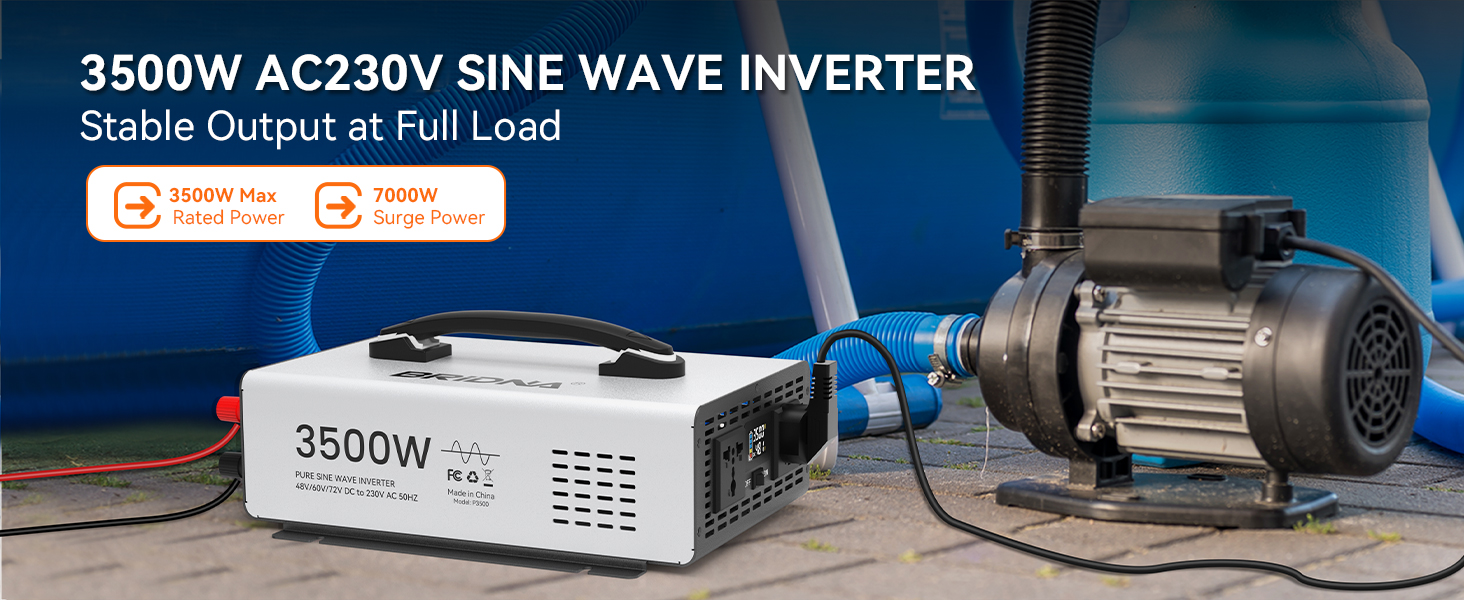
Product Tech Article | Vehicle‑Mounted Power‑Electronics For Integrators & Wholesale Partners
Bridna 3500W Power Inverter: Engineered Power‑Electronics For EV Emergency Backup And RV System Integration