Lifepo4 phosphate battery maintenance(1)
author: PRO
2023-10-21
Eight advantages of Lifepo4 phosphate battery

Improvement of safety performance
The P-O key in lithium iron phosphate crystals is stable and difficult to decompose. Even when it is high or overcharge, it will not be structurally like lithium cobaltate or forms a strong oxidized substance, so it has good safety. Some reports pointed out that in the actual operation, a small number of samples were found in acupuncture or short -circuit experiments, but there was no explosion event, and the use of high voltage charging was greatly exceeded in the over -charging experiment. Explosion. Nonetheless, its overload safety has greatly improved compared to ordinary liquid electrolytic lithium cobaltate batteries.
The P-O key in lithium iron phosphate crystals is stable and difficult to decompose. Even when it is high or overcharge, it will not be structurally like lithium cobaltate or forms a strong oxidized substance, so it has good safety. Some reports pointed out that in the actual operation, a small number of samples were found in acupuncture or short -circuit experiments, but there was no explosion event, and the use of high voltage charging was greatly exceeded in the over -charging experiment. Explosion. Nonetheless, its overload safety has greatly improved compared to ordinary liquid electrolytic lithium cobaltate batteries.
Improvement of life
Lithium iron phosphate batteries refer to lithium ion batteries using lithium iron phosphate as a positive pole material. The circulation life of long life lead -acid batteries is about 300 times, and the maximum is 500 times. The cycle life of lithium iron phosphate power batteries has reached more than 2,000 times. The standard charging (5 -hour rate) can be used, which can reach 2000 times. The same -quality lead -acid batteries are "new half a year, old half a year, maintenance and maintenance for half a year", at most 1 to 1.5 years, and lithium iron phosphate batteries are used under the same conditions, and the theoretical life expectancy will reach 7-8 years. Comprehensive consideration, performance prices are theoretically more than 4 times that of lead -acid batteries. Large -current discharge can be large -current 2C quickly and quickly charged. Under the special charger, the battery can be filled within 40 minutes of charging, and the starting current can reach 2C, while the lead -acid battery has no performance.
Lithium iron phosphate batteries refer to lithium ion batteries using lithium iron phosphate as a positive pole material. The circulation life of long life lead -acid batteries is about 300 times, and the maximum is 500 times. The cycle life of lithium iron phosphate power batteries has reached more than 2,000 times. The standard charging (5 -hour rate) can be used, which can reach 2000 times. The same -quality lead -acid batteries are "new half a year, old half a year, maintenance and maintenance for half a year", at most 1 to 1.5 years, and lithium iron phosphate batteries are used under the same conditions, and the theoretical life expectancy will reach 7-8 years. Comprehensive consideration, performance prices are theoretically more than 4 times that of lead -acid batteries. Large -current discharge can be large -current 2C quickly and quickly charged. Under the special charger, the battery can be filled within 40 minutes of charging, and the starting current can reach 2C, while the lead -acid battery has no performance.
High temperature performance is good
Lithium iron phosphate can reach 350 ° C-500 ° C, while lithium manganate and lithium cobaltate are only about 200 ° C. The working temperature range is wide (-20C-+75C), which has high temperature resistance.
Lithium iron phosphate can reach 350 ° C-500 ° C, while lithium manganate and lithium cobaltate are only about 200 ° C. The working temperature range is wide (-20C-+75C), which has high temperature resistance.
High capacity
It has a larger capacity than ordinary batteries (lead acid, etc.). 5AH-1000AH (single)
It has a larger capacity than ordinary batteries (lead acid, etc.). 5AH-1000AH (single)
Memoryless effect
The battery can work under the condition that it is often filled with unstoppable conditions, and the capacity will be quickly lower than the rated capacity value. This phenomenon is called memory effect. Like nickel -metal hydride and nickel -cadmium batteries, there are memory, while lithium iron phosphate batteries do not have this phenomenon. No matter what state in the battery is, it can be used with it without charging before charging.
The battery can work under the condition that it is often filled with unstoppable conditions, and the capacity will be quickly lower than the rated capacity value. This phenomenon is called memory effect. Like nickel -metal hydride and nickel -cadmium batteries, there are memory, while lithium iron phosphate batteries do not have this phenomenon. No matter what state in the battery is, it can be used with it without charging before charging.
Light weight
The volume of the lithium iron phosphate battery of the same specifications is 2/3 of the volume of the lead -acid battery, and the weight is 1/3 of the lead -acid battery.
The volume of the lithium iron phosphate battery of the same specifications is 2/3 of the volume of the lead -acid battery, and the weight is 1/3 of the lead -acid battery.
Environmental friendly
The battery is generally considered to be without any heavy metals and rare metals (nickel -metal hydride batteries require rare metals), non -toxic (SGS certification), non -polluting, and complies with European ROHS regulations to be absolutely green environmentally friendly battery certificates. Therefore, the reason why lithium batteries are optimistic about the industry are mainly environmental protection considerations. Therefore, the battery is also included in the "863" national high -tech development plan during the "Fifth Fifteenth" period, becoming a project for national key support and encouraging development. As China joins the WTO, the export volume of Chinese electric bicycles will increase rapidly, and electric bicycles entering Europe and the United States have requested that it is equipped with pollution -free batteries.
However, some experts said that environmental pollution caused by lead -acid batteries mainly occur in the irregular production process and recycling process of enterprises. Similarly, lithium batteries are good in the new energy industry, but it cannot avoid the problem of heavy metal pollution. There are lead, arsenic, cadmium, mercury, chromium, etc. in the processing of metal materials may be released into dust and water. The battery itself is a kind of chemical, so there may be two kinds of pollution: one is the pollution of process excrement in production engineering; the other is the battery pollution after scrap.
Lithium iron phosphate batteries also have their disadvantages: for example, poor low temperature properties, small density density of positive materials, and lithium iron phosphate batteries of equal capacity are greater than lithium ion battery such as lithium cobaltate, so there is no advantage in micro -battery. When used for power batteries, lithium iron phosphate batteries, like other batteries, need to face the consistency problem of battery.
The battery is generally considered to be without any heavy metals and rare metals (nickel -metal hydride batteries require rare metals), non -toxic (SGS certification), non -polluting, and complies with European ROHS regulations to be absolutely green environmentally friendly battery certificates. Therefore, the reason why lithium batteries are optimistic about the industry are mainly environmental protection considerations. Therefore, the battery is also included in the "863" national high -tech development plan during the "Fifth Fifteenth" period, becoming a project for national key support and encouraging development. As China joins the WTO, the export volume of Chinese electric bicycles will increase rapidly, and electric bicycles entering Europe and the United States have requested that it is equipped with pollution -free batteries.
However, some experts said that environmental pollution caused by lead -acid batteries mainly occur in the irregular production process and recycling process of enterprises. Similarly, lithium batteries are good in the new energy industry, but it cannot avoid the problem of heavy metal pollution. There are lead, arsenic, cadmium, mercury, chromium, etc. in the processing of metal materials may be released into dust and water. The battery itself is a kind of chemical, so there may be two kinds of pollution: one is the pollution of process excrement in production engineering; the other is the battery pollution after scrap.
Lithium iron phosphate batteries also have their disadvantages: for example, poor low temperature properties, small density density of positive materials, and lithium iron phosphate batteries of equal capacity are greater than lithium ion battery such as lithium cobaltate, so there is no advantage in micro -battery. When used for power batteries, lithium iron phosphate batteries, like other batteries, need to face the consistency problem of battery.
Lifepo4 phosphate battery maintenance(2)
Global Sources New Energy Show
Related Article

System‑Level Engineering For Compact Portable Power‑Station Architecture
Bridna 300W Outdoor Portable Solar Power Station: Compact Engineered Energy Unit For Field And Emergency Deployments
Product Tech Article | Vehicle‑Mounted Power‑Electronics For Integrators & Wholesale Partners
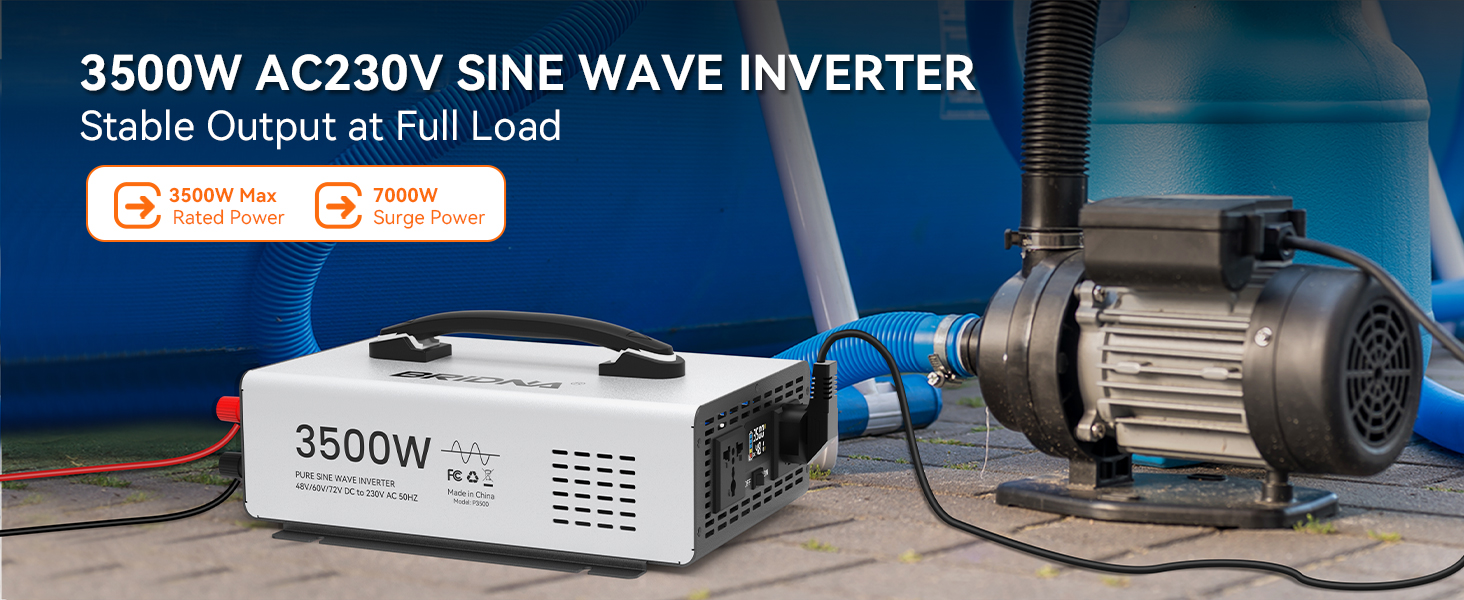
Bridna 3500W Power Inverter: Engineered Power‑Electronics For EV Emergency Backup And RV System Integration