The future of lithium iron phosphate batteries(1)
author: Pro
2023-07-29

Recently, Ouyang Minggao, an academician of the Chinese Academy of Sciences, publicly stated: "It is generally believed that lithium iron phosphate batteries are relatively safe. In essence, this is true for small lithium iron phosphate batteries, but for large-capacity batteries, such as 320Ah batteries, their internal temperature can exceed 800 degrees, which exceeds the temperature at which the lithium iron phosphate cathode decomposes."
The larger the capacity, the higher the risk of thermal runaway
The larger the capacity, the higher the risk of thermal runaway
The main difference between the safety of lithium iron phosphate small-capacity batteries and large-capacity batteries lies in whether the internal temperature of the battery exceeds the decomposition temperature of the positive electrode material.
The positive electrode material of lithium iron phosphate battery generally decomposes at 500°C. The internal temperature of small-capacity lithium iron phosphate battery of lithium iron phosphate positive electrode material is generally 300-400°C, and the internal temperature of large-capacity lithium iron phosphate battery can exceed 800°C.
This is why the risk of thermal runaway of large-capacity lithium iron phosphate batteries is higher.
The deflagration index is twice that of the ternary battery
The positive electrode material of lithium iron phosphate battery generally decomposes at 500°C. The internal temperature of small-capacity lithium iron phosphate battery of lithium iron phosphate positive electrode material is generally 300-400°C, and the internal temperature of large-capacity lithium iron phosphate battery can exceed 800°C.
This is why the risk of thermal runaway of large-capacity lithium iron phosphate batteries is higher.
The deflagration index is twice that of the ternary battery
Compared with lithium iron phosphate batteries and ternary batteries, the explosion index of lithium iron phosphate batteries is twice that of ternary batteries. Ternary batteries are prone to thermal runaway by themselves, and they can be ignited by themselves. Lithium iron phosphate batteries are not the case, and they cannot be ignited by themselves, but the risk of gas explosion is higher, and it is more dangerous when encountering open flames.
For ternary batteries, when the internal temperature is about 200°C, the positive electrode material will decompose and release oxygen, and the electrolyte will burn rapidly at high temperature, and the combustion will be more intense.
For large-capacity lithium iron phosphate batteries, when the internal temperature exceeds 500°C, the cathode material begins to decompose, the battery undergoes thermal runaway, and a large amount of flammable electrolyte vapor (containing hydrogen, etc., but not oxygen) is generated. As the SOC increases, the concentration of hydrogen increases, which can The explosion risk is higher, but the burning intensity is lower than that of the ternary battery.
For ternary batteries, when the internal temperature is about 200°C, the positive electrode material will decompose and release oxygen, and the electrolyte will burn rapidly at high temperature, and the combustion will be more intense.
For large-capacity lithium iron phosphate batteries, when the internal temperature exceeds 500°C, the cathode material begins to decompose, the battery undergoes thermal runaway, and a large amount of flammable electrolyte vapor (containing hydrogen, etc., but not oxygen) is generated. As the SOC increases, the concentration of hydrogen increases, which can The explosion risk is higher, but the burning intensity is lower than that of the ternary battery.
The future of lithium iron phosphate batteries(2)
you must choose the LiFePO4 solar generator
Related Article

System‑Level Engineering For Compact Portable Power‑Station Architecture
Bridna 300W Outdoor Portable Solar Power Station: Compact Engineered Energy Unit For Field And Emergency Deployments
Product Tech Article | Vehicle‑Mounted Power‑Electronics For Integrators & Wholesale Partners
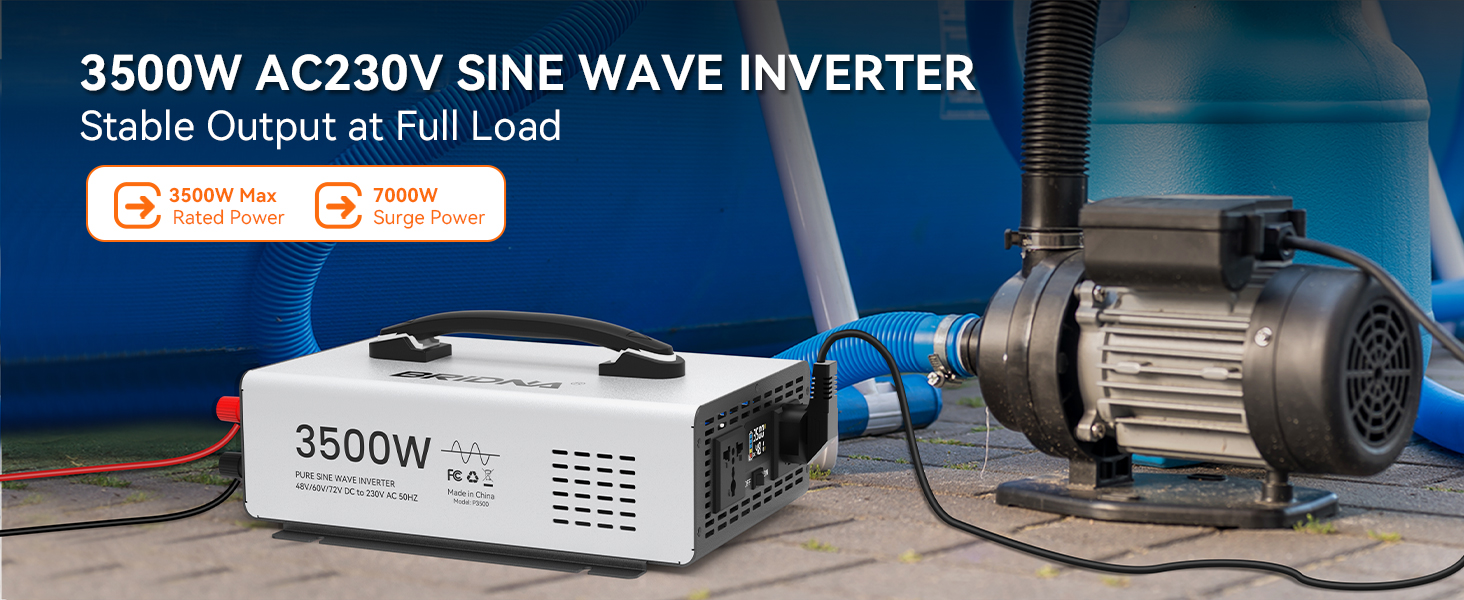
Bridna 3500W Power Inverter: Engineered Power‑Electronics For EV Emergency Backup And RV System Integration