
Overview of photovoltaic inverters
author: pro
2024-05-28
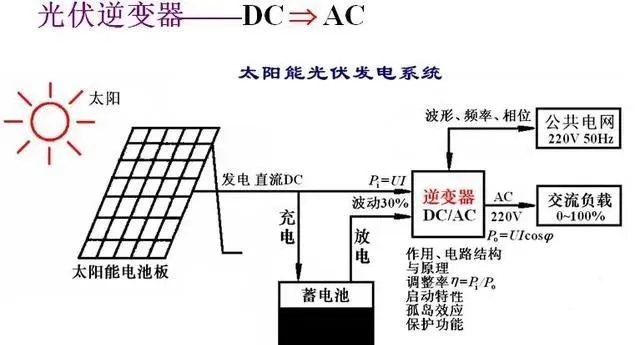
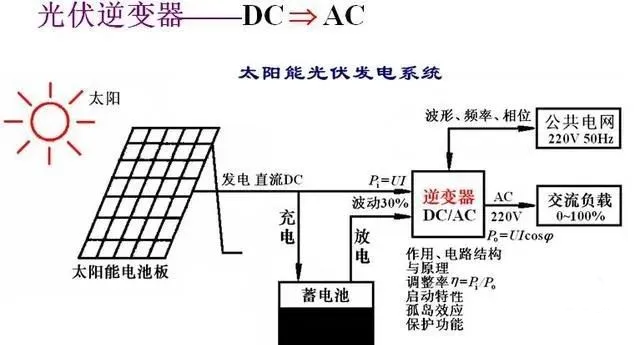
The process of converting DC electrical energy into AC electrical energy is called inversion, the circuit that completes the inversion function is called inversion circuit, and the device that implements the inversion process is called inverter or inversion device. The inverter used in solar photovoltaic power generation systems is a conversion device that converts the direct current energy generated by solar cells into alternating current energy. It makes the voltage, frequency, waveform, etc. of the converted alternating current consistent with the voltage, frequency, waveform, etc. of the alternating current in the power system, in order to meet the needs of supplying power to various AC power devices, equipment, and grid connected power generation.
1.1 Classification of photovoltaic inverters
Small power (<4kW) photovoltaic power generation systems generally use sine wave inverters. The display function of the inverter mainly includes: measurement values of DC input voltage and current, measurement values of AC output voltage and current, and the working status of the inverter (operation, fault, shutdown, etc.).
1.2 Circuit composition of photovoltaic inverters
The basic circuit composition of the inverter is shown in Figure 6-1. It mainly consists of input circuit, output circuit, main inverter switch circuit (referred to as main inverter circuit), control circuit, auxiliary circuit, and protection circuit.
control circuit
The control circuit of the inverter mainly provides a series of control pulses to the main inverter circuit to control the conduction and turn off of the inverter switching device, and cooperates with the main inverter circuit to complete the inverter function.
Auxiliary circuit
The auxiliary circuit mainly converts the input voltage into a DC voltage suitable for controlling the operation of the circuit. The auxiliary circuit also includes various detection and display circuits. The display function of the inverter mainly includes: measurement values of DC input voltage and current, measurement values of AC output voltage and current, and the working status of the inverter (operation, fault, shutdown, etc.).
protection circuit
The protection circuit of the inverter mainly includes input overvoltage and undervoltage protection, output overvoltage and undervoltage protection, overload protection, overcurrent and short circuit protection, reverse connection protection, overheating protection, etc.
1.3 Main components of photovoltaic inverters
The inverter mainly consists of two parts: semiconductor power devices and inverter drive and control circuits. Currently, most inverters use power field-effect transistors (VMOSFETs), insulated gate transistors (IGBTs), and turnoff transistors (GTOs) MOS control transistor (MGT) MOS controlled thyristors (MCTs), static induction transistors (SITs), static induction thyristors (SITs), and intelligent power modules (IPMs) are various advanced and easy to control high-power devices. The control of inverter drive circuits has also evolved from analog integrated circuits to microcontroller control, and even uses digital signal processors (DSP) to control, making inverters develop towards high-frequency, energy-saving, fully controlled, integrated, and multifunctional directions.
The Smarter E Europe 2024
What is the difference between a sine wave inverter and a correction wave
Related Article

System‑Level Engineering For Compact Portable Power‑Station Architecture
Bridna 300W Outdoor Portable Solar Power Station: Compact Engineered Energy Unit For Field And Emergency Deployments
Product Tech Article | Vehicle‑Mounted Power‑Electronics For Integrators & Wholesale Partners
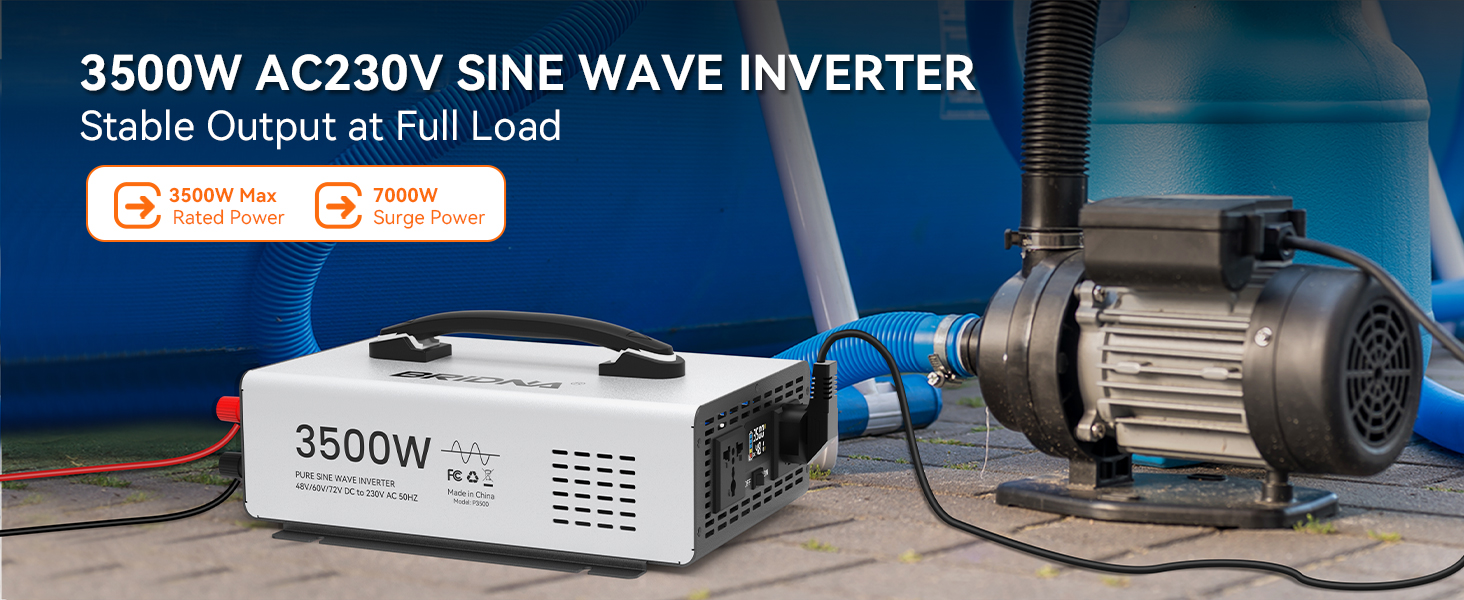
Bridna 3500W Power Inverter: Engineered Power‑Electronics For EV Emergency Backup And RV System Integration