Inverter: More Than Just "Voltage Transformation"
In an era where new energy is increasingly integrated into daily life, the term "inverter"—once a technical jargon reserved for engineers—is finding its way into the conversations of everyday consumers. However, many people's understanding of it remains stuck at the basic level of "converting DC to AC."
In reality, an inverter is far more than just a "voltage transformation tool." It is the "heart" and the "brain" of the entire power system, the critical factor determining power quality, equipment safety, and energy efficiency.
From "Works" to "Works Well": The Evolution of the Inverter
If you've ever used an early-generation inverter, you might have had this experience: after plugging in an appliance, the lights would flicker slightly, fans would make odd noises when running, and some precision devices simply wouldn't function. The culprit behind these issues was often the poor quality of the power output by the inverter.
Early inverters mostly output "modified sine waves." While they could make appliances run, the current waveform was rough, and the harmonic distortion was high (Total Harmonic Distortion, or THD, could reach 40%). This is like feeding precision instruments rough food—it might work temporarily, but over the long term, it can damage the equipment's lifespan.
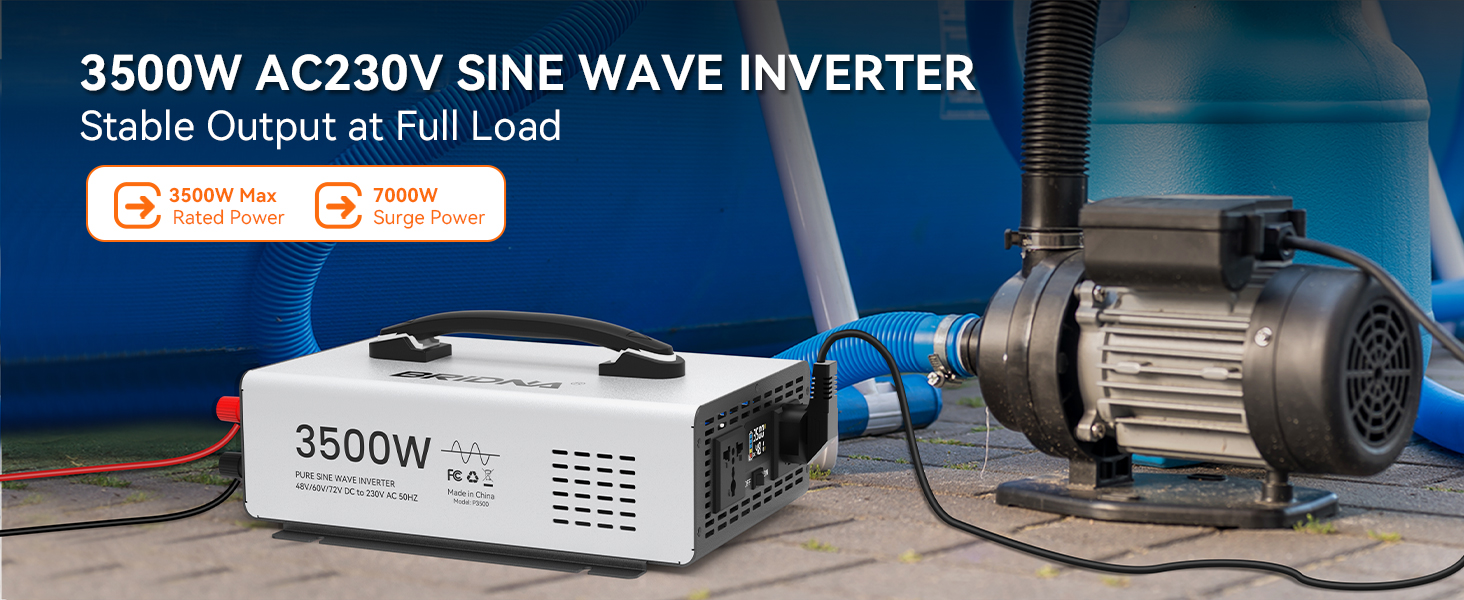
Today's advanced inverters, however, have evolved to output "pure sine waves." Take the BRIDNA inverter as an example. Using pure sine wave technology, it can control total harmonic distortion to within 3% . The waveform of the current it produces is almost identical to grid power—smooth and clean. What does this mean? It means your refrigerator compressor can run quietly. It means medical equipment, audio systems, and smart home appliances can all enjoy the protection of the highest quality power, free from damage.
The "Hidden Value" of 90% Efficiency
When operating, inverters consume some electrical energy themselves. This loss directly determines how much of the money you spend is actually converted into usable power.
The industry standard efficiency is typically around 85%. By optimizing circuit design and using high-quality power components, BRIDNA boosts conversion efficiency to over 90% , with some high-power models reaching up to 92%. This seemingly modest 5%-7% improvement translates into tangible savings on electricity bills and longer battery runtime over the long haul. For off-grid systems and energy storage applications, efficiency is a lifeline. It directly determines how many extra hours of light you have in an emergency, or how much longer you can keep your refrigerator running to preserve food.
More Than "Conversion": It's a Smart Manager
Another major evolution of the modern inverter is the shift from "passive operation" to "active management."
Consider this scenario: You're camping in an RV, or working in a remote area, and you can't constantly monitor your equipment. What happens if the inverter malfunctions?
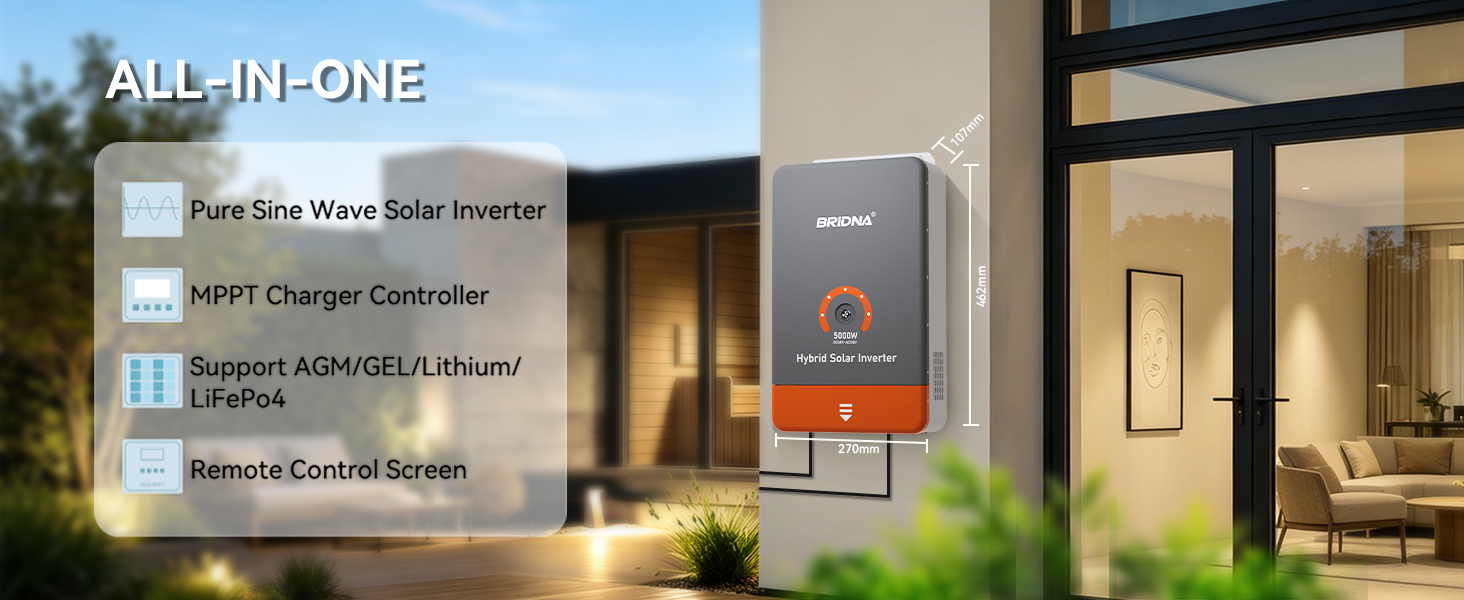
This is precisely where the value of a new-generation inverter like BRIDNA lies—it's not just hardware, but a system equipped with a "smart brain." Through its LED+LCD display, key data like voltage, current, power, and battery level are clear at a glance. Paired with a remote control interface, you can switch the device on or off and adjust operating modes from dozens of meters away.
When the device is overloaded or short-circuits, it can automatically cut off output in milliseconds to protect downstream appliances. If the temperature gets too high, intelligent cooling fans activate to ensure continuous full-power operation. Even where you can't see it, it's always working silently to protect your system.
Born for "Scenarios": The Many Lives of an Inverter
A truly great inverter is a versatile player with strong "scenario adaptability."
For home emergency backup, it can be the "guardian of light" during a power outage, keeping food in the fridge from spoiling and ensuring your aquarium pump keeps running.
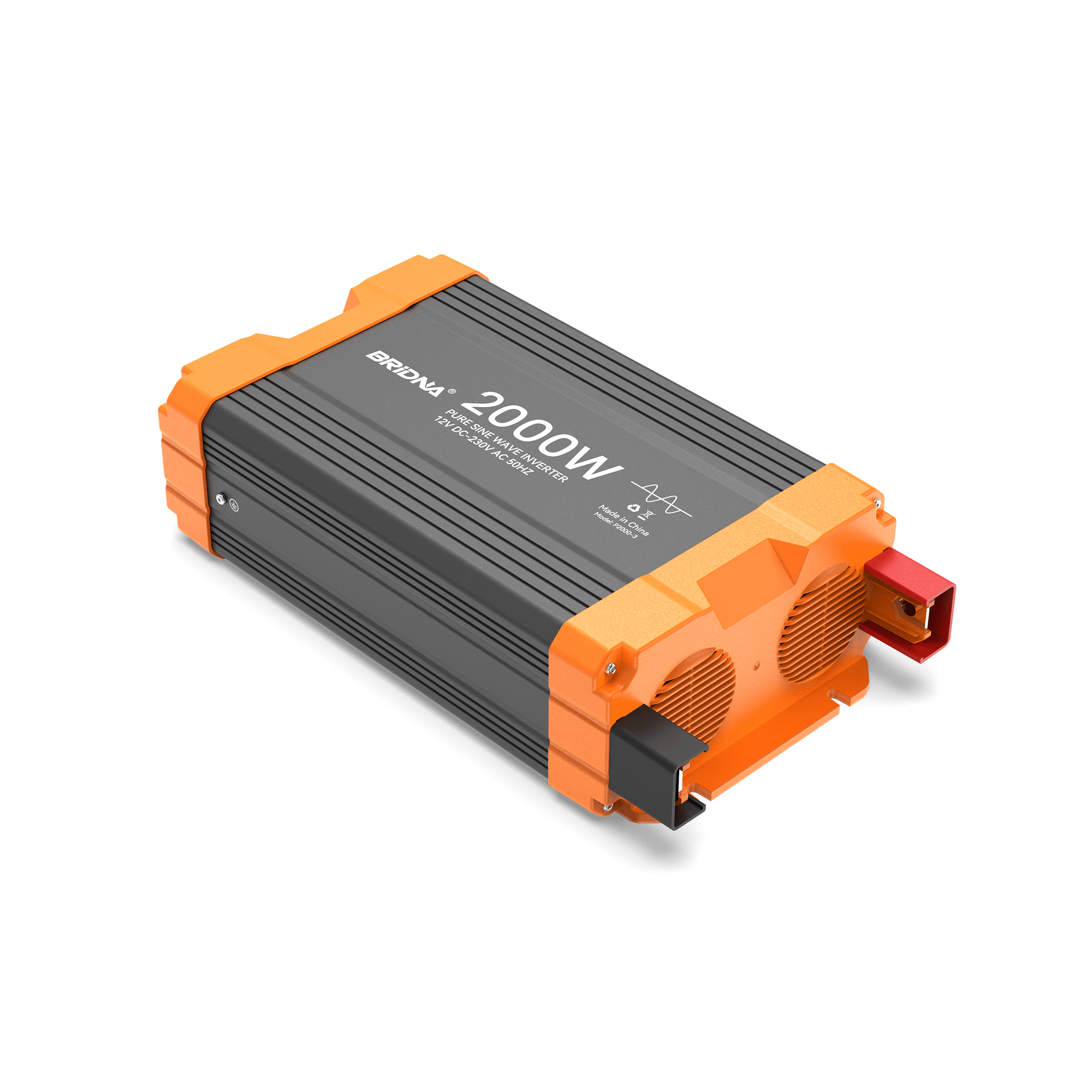
For RV enthusiasts, it's a mobile home—from the 1000W base model (powering TVs, lights, fans), to the 2000W advanced version (supporting refrigerators, power tools), and up to the 4000W professional model (more than capable of handling high-load devices like air conditioners, induction cooktops, or even small servers) —different power levels cater to different life scenarios.
For outdoor work and remote applications like communication base stations or surveillance systems , its sturdy metal casing and wide voltage input adaptability (available in 12V/24V/48V) ensure stable operation even in harsh environments.
The Rigor Behind Every Watt Begins on This Production Line
Factory Showroom Introduction
Related Article