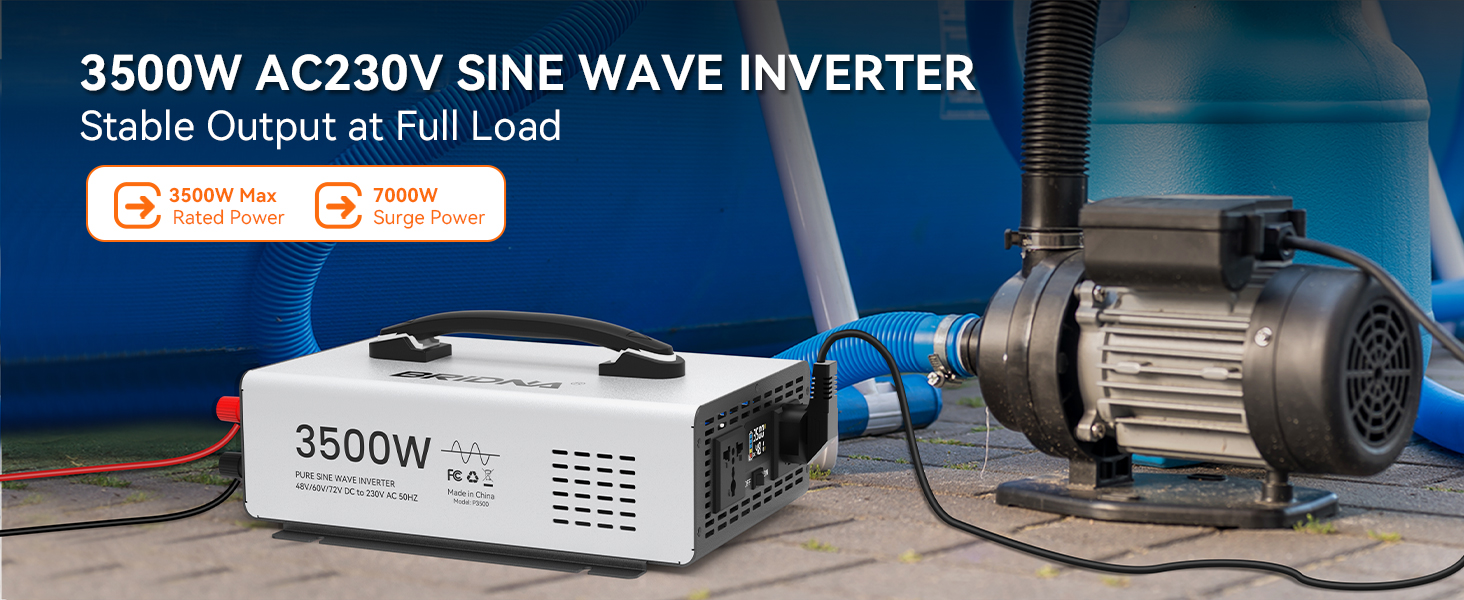
New Trends in 3000W Pure Sine Wave Inverters: Towards Efficiency, Intelligence, and Integration
1. Deep Integration of High-Frequency and Digital Technologies
Traditional low-frequency inverters are being rapidly replaced by high-frequency, fully digital control solutions. Using DSPs (Digital Signal Processors) or advanced MCUs as the core, these inverters precisely control power switches (such as MOSFETs, IGBTs) through software algorithms. This achieves higher conversion efficiency (peak efficiency over 94%), faster dynamic response, and more stable output voltage waveform. Digitalization also brings robust protection features and fault self-diagnosis capabilities, enhancing device reliability and ease of maintenance.
2. Intelligence and Remote Management Become Standard
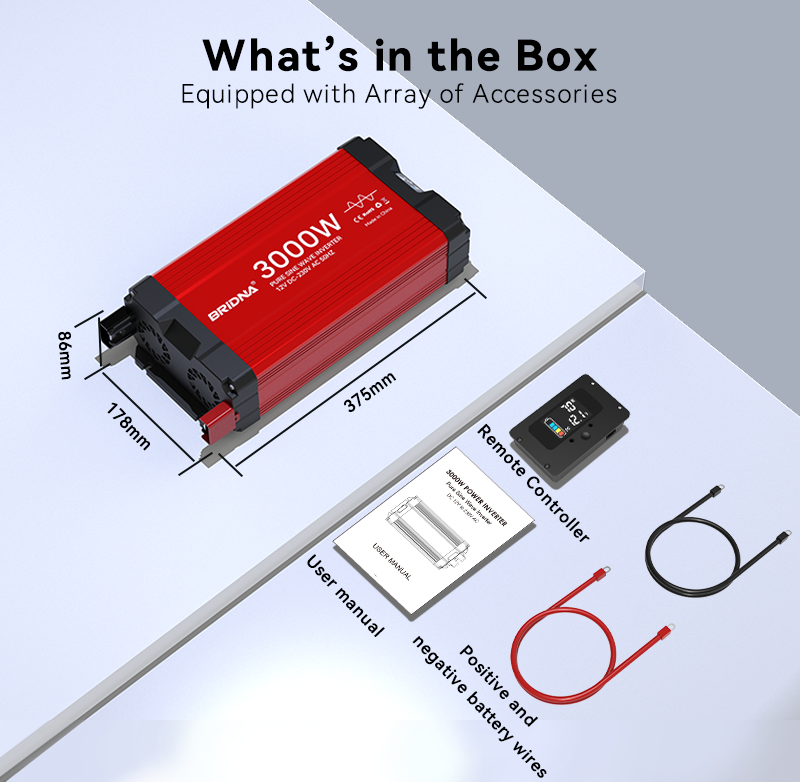
The integration of Internet of Things (IoT) technology is a major highlight. New inverters are commonly equipped with Bluetooth or Wi-Fi modules, allowing users to monitor key parameters in real-time via mobile apps - including voltage, current, power, energy statistics, and device temperature. Features like remote on/off control, customizable alarm thresholds, and over-the-air firmware updates make power management unprecedentedly convenient and precise, meeting the user demand for "controlling energy anytime, anywhere."
3. Solar-Integrated and Hybrid System Compatibility
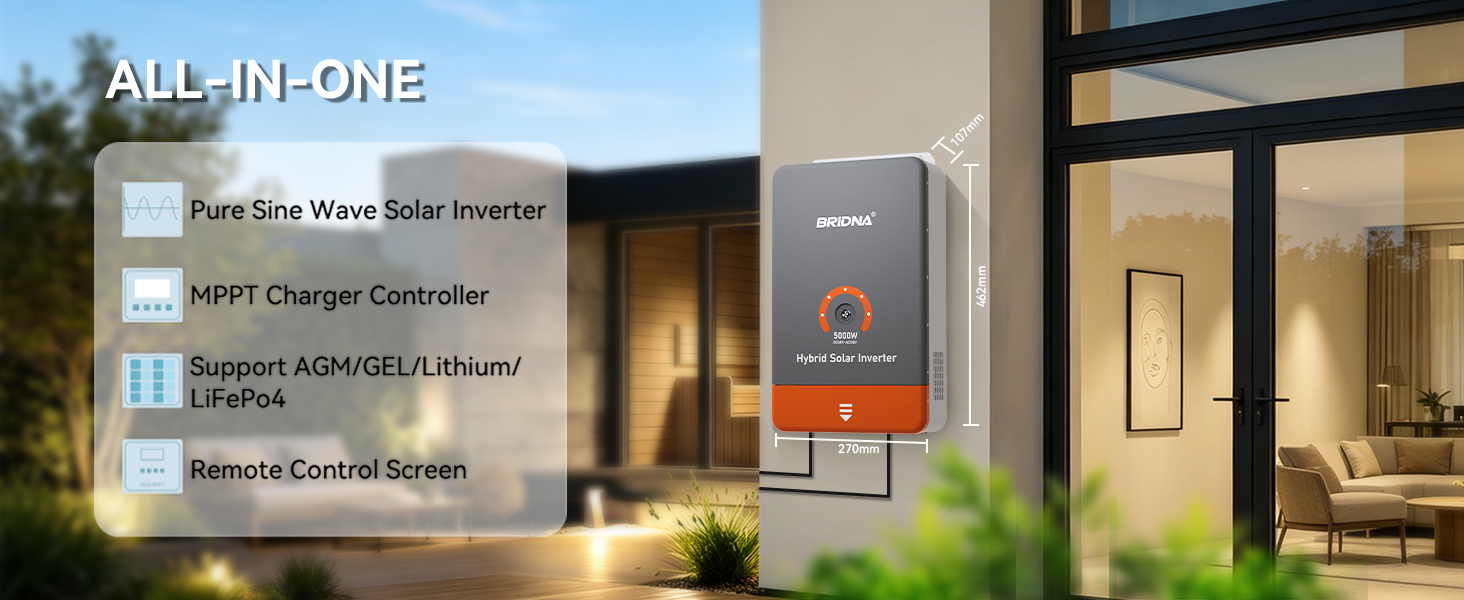
To adapt to the rapidly growing renewable energy applications, the modern 3000W inverter is no longer just a standalone DC-AC conversion unit. More products are integrating MPPT solar charge controllers, enabling seamless connection to solar panels to build small-scale off-grid or hybrid solar-storage systems. This "all-in-one inverter charger" design simplifies system wiring, reduces overall costs, and is an ideal choice for scenarios like home energy storage and RV living.
4. Ultra-Quiet Operation and Efficient Thermal Management
To enhance the user experience, fanless silent standby technology and intelligent temperature-controlled fans are becoming popular. The fan remains completely off under low load, achieving zero noise. It smoothly starts and intelligently adjusts speed when load or temperature increases. Combined with optimized cooling airflow and high thermal conductivity materials, this ensures stable operation during continuous high-power output while significantly improving the user experience in quiet environments (like bedrooms, inside vehicles).
5. Wide Voltage Input and Multi-Battery Type Compatibility
To cope with complex power environments, new products offer a wider input voltage range, better adapting to different series/parallel configurations of lithium batteries, lead-acid batteries, etc. Simultaneously, built-in intelligent battery management algorithms can accurately identify and adapt to various battery chemistries, providing optimized charging curves and effectively extending battery life.
Technology-Driven Energy Innovation: SPI/GES Series High-Frequency Inverters, Building Highly Reliable and Efficient Residential Energy Storage Systems
The global market for photovoltaic modules and inverters is projected to exceed $115.8 billion by 2030.
Related Article