The future of lithium iron phosphate batteries(2)
author: Pro
2023-07-29
Large-capacity trend, security is difficult to guarantee
Recently, at the CIBF Shenzhen International Battery Technology Exhibition, a number of leading energy storage battery companies displayed energy storage lithium iron phosphate battery products with a capacity of 300Ah and above. The increase in battery capacity has become an industry development trend.
Veken Energy Storage has counted the large-capacity energy storage lithium iron phosphate battery products of 16 of them, and ranked them by capacity.
Vision Energy's energy storage battery cell products rank with a capacity of 580Ah, followed closely by EVE Lithium Energy's 560Ah energy storage battery cell products, and Haiji New Energy's 375Ah battery cell products rank third.
picture
Image source: Veken.com energy storage arrangement
Companies that have developed energy storage battery products with a capacity of 300Ah and above include Honeycomb Energy (325Ah), Ruipu Lanjun (320Ah), Chuneng New Energy (306Ah/315Ah), Shoto Group (315Ah), Envision Power (305Ah/315Ah), Ganfeng Lithium Battery (314Ah), Lanjun New Energy (314Ah), Xinwangda (314Ah), Haichen Energy Storage (300Ah/320Ah), Far East Battery (305Ah), Kunyu Power Supply (305Ah) , Narada Power (305Ah) and Guoxuan Hi-Tech (300Ah), etc.
Energy storage-type large-capacity batteries have become a development trend. How to ensure battery safety is a difficult problem that all energy storage battery companies must face.
All-solid-state batteries are the future
Energy storage-type large-capacity batteries have become a development trend. How to ensure battery safety is a difficult problem that all energy storage battery companies must face.
All-solid-state batteries are the future
Energy storage focuses on three elements: long life, low cost, and high safety. For electrochemical energy storage represented by lithium iron phosphate, long life is relatively easy to achieve, and the low cost will eventually be resolved as the industry scale increases, and safety issues will run through.
In order to improve the safety of energy storage, one of the solutions given by the market is to develop different energy storage technologies. For example, from the intrinsic point of view, develop solid-state batteries or water-based batteries to realize the development from battery safety to safe batteries.
Academician Ouyang Minggao said that they believe that the ultimate goal of intrinsic safety is all-solid-state batteries.
There are two main advantages of all-solid-state batteries: first, solid-state electrolytes replace liquid electrolytes and diaphragms, and solid-state electrolytes have a very high ignition point without leakage, which can significantly improve battery safety; second, all-solid-state batteries have higher energy density , up to 400Wh/kg, lithium-sulfur/lithium-air batteries are expected to achieve 500Wh/Kg.
However, the current all-solid-state battery technology is not mature and is still in the research and development stage. There are problems such as low ionic conductivity, poor cycle life, poor rate performance, and high cost, which restrict the commercialization process.
According to EVTank's forecast, by 2030, the global solid-state battery penetration rate will be 10%, and the demand will reach 276.8GWh. From 2023 to 2030, the CAGR of global solid-state battery demand growth is 63.7%.
The explosive growth of energy storage is still ongoing
The future of lithium iron phosphate batteries(1)
Related Article

System‑Level Engineering For Compact Portable Power‑Station Architecture
Bridna 300W Outdoor Portable Solar Power Station: Compact Engineered Energy Unit For Field And Emergency Deployments
Product Tech Article | Vehicle‑Mounted Power‑Electronics For Integrators & Wholesale Partners
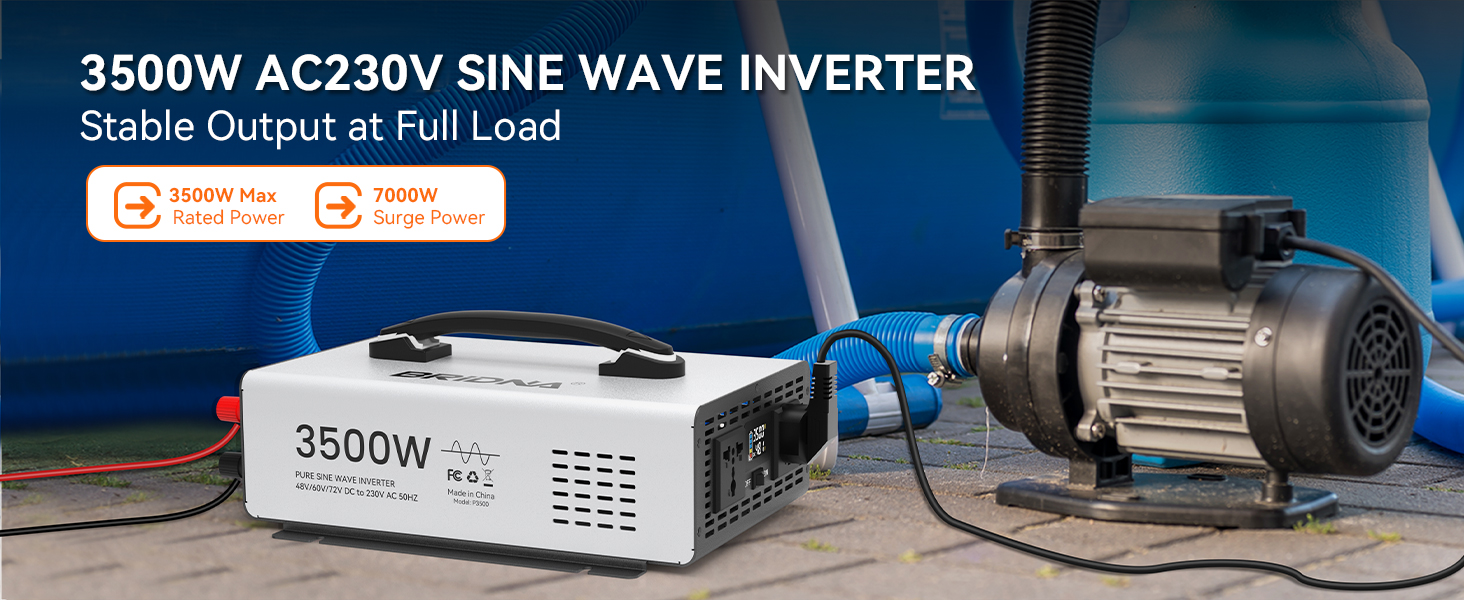
Bridna 3500W Power Inverter: Engineered Power‑Electronics For EV Emergency Backup And RV System Integration